Creating a Feminist Identity Through Kill Bill is Tacky
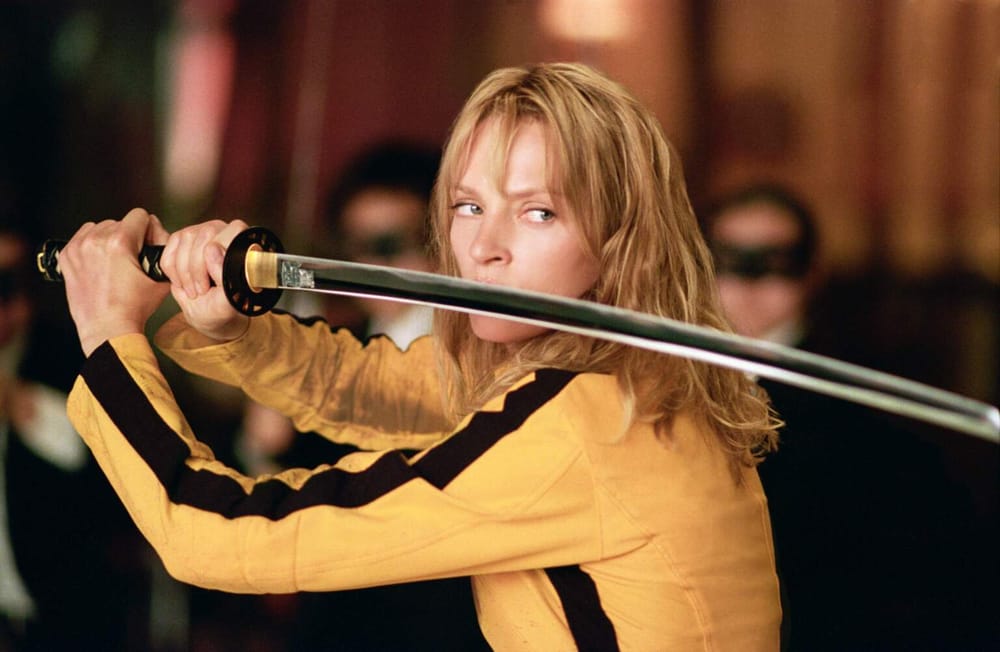
Watching Kill Bill Vol. 1 and adopting the persona of a strong, independent woman who determines her own life and gets everything she wants through the character of Beatrix "The Bride" Kiddo cannot be considered feminism. Ignoring the experiences of an actor who was harassed and abused during the production of this commodity, the supposed values of a character sculpted purely for the male gaze from start to finish can only serve as the commercialized and distilled appetizer of popular culture.
The relationship established between feminism and individual independence through the main character of Kill Bill, The Bride, and her experiences is merely the reinforcement of patriarchal discourses, served up once again through a male-dominated perspective.
Kill Bill has always been a part of popular culture
Since its release in 2003, Kill Bill has managed to sustain its place in popular culture. From the choreography of its action scenes, the blood, and the fetishized East Asian aesthetics to its whistled melody and its reflections in fashion, Kill Bill has successfully preserved its status within pop culture.
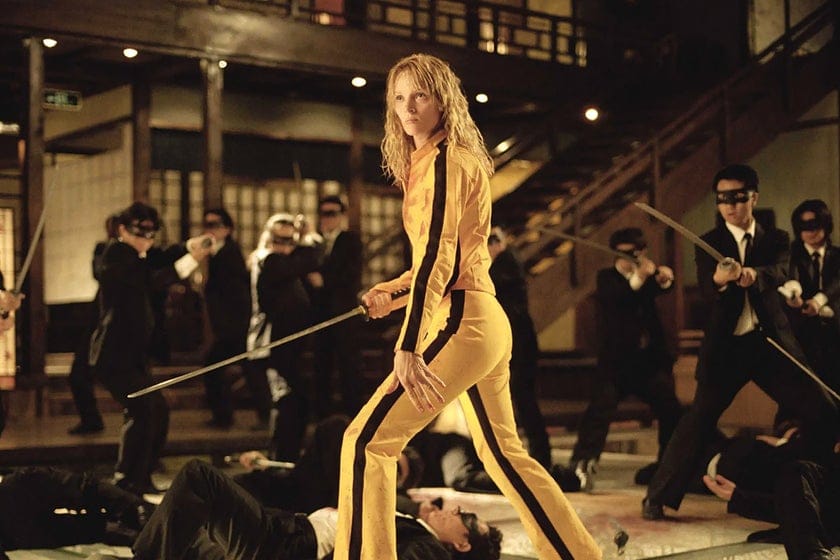
So much so that the film contains many segments that almost mirror today’s clip culture. With the vehicle named the "Pussy Wagon," The Bride’s yellow tracksuit, and mystical characters like Hattori Hanzo, it emerged before us as the ideal union of Hollywood, soap operas, and Japanese aesthetics.
The tracksuit worn by The Bride has found a place for itself at Halloween or costume parties almost every year. When the melody composed by Bernard Herrmann as the theme music for the 1968 film Twisted Nerve was brought back to the screen via a whistle in Kill Bill, everyone came to know it as the "Kill Bill ringtone."
The unexpected consequences of Uma Thurman's presence
Through these small cultural artifacts left in popular culture, Kill Bill managed to keep itself alive for years. It set the tone for those newly introduced to film. Those who encountered the media praise before the films approached it with a certain bias and pressed play almost conditioned to like it.
After following these steps, many gained detailed knowledge about the film's behind-the-scenes, what happened during the production process, and Quentin Tarantino. Especially for the generation who were too young to watch Reservoir Dogs and Pulp Fiction when they were released and were introduced to Tarantino through Kill Bill, the perception presented by the media played a critical role.
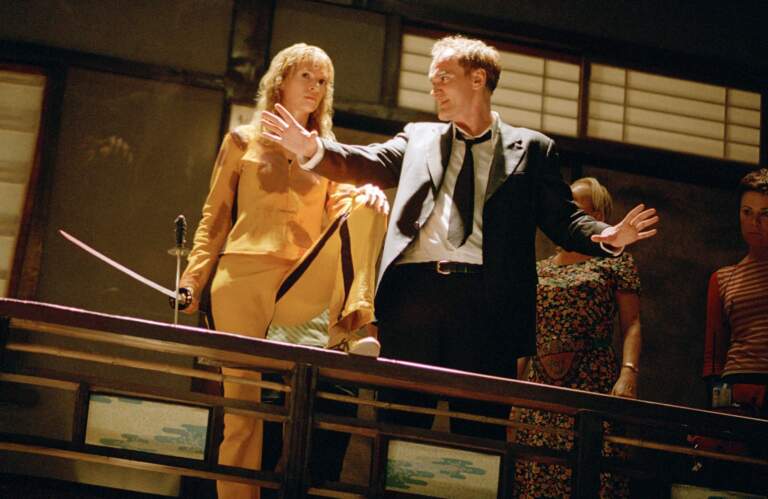
During the early years of the MeToo movement, speaking about her roles in Pulp Fiction and Kill Bill and what she went through at the time, Uma Thurman expressed her disgust at playing a part in creating the myths of Harvey Weinstein and Quentin Tarantino. While Thurman played an active role in creating the myth of the bloody, revenge-seeking bride, striving for a Hitchcock- and Bergman-style production, the added foot fetish practically became Tarantino's artistic signature.
While Pulp Fiction made Weinstein the figure he became, Thurman had played the character that enabled him to buy the luxurious house he lived in; she was essentially a tool that paved his way and ensured his validity in the industry. In Kill Bill, which supposedly symbolizes female empowerment, senior producer Weinstein was virtually solidifying his own position within the sector.
Despite all of Weinstein's perverse actions, these films stand as badges of success in his career. And the likelihood that he used Uma Thurman as an example when contacting many women for similar roles only compounds the problems the actor experienced regarding that period.
Tarantino's obsessive passion in production
Both the events reflected on camera and those that occurred during the production process of Kill Bill read like a summary of male-dominated life. Thurman’s sharing of Weinstein’s abusive moves and the relationship between the trio create both a toxic and patriarchal oppressive dynamic among the factors that brought Kill Bill together. While Tarantino cynically tolerates Weinstein's actions, Thurman's experiences are completely ignored.
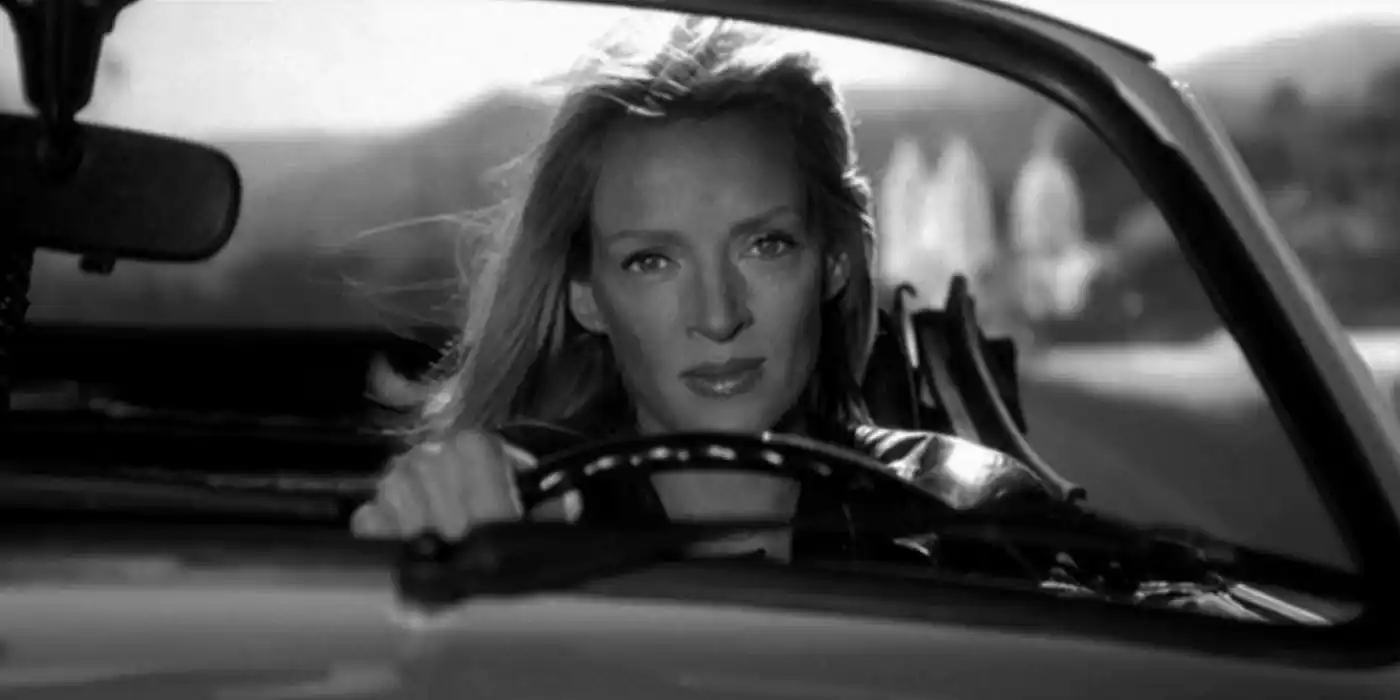
Furthermore, in the scene where Thurman drives the blue convertible, she requested a stunt double, but the director refused this request. The actor, participating in the scene herself, lost control of the vehicle, suffered a neck injury, and got a concussion.
Even though the director later made statements calling the incident as "the biggest regret of my life," during the shoot, he told her she had to drive the car at least 40 mph (64 km/h), otherwise her hair wouldn't blow and flow sufficiently, and they would have to reshoot.
As a film featuring Weinstein's harassment behind the scenes and Tarantino fetishizing the actor by her body, posture, and identity through the camera lens, it is obvious that Kill Bill took a lot from Uma Thurman. We stared at Uma Thurman's feet at length, we saw her choked with a chain, and spat in the face. From day one, Kill Bill was a medium where Tarantino's sadistic desires could flourish.
The fallacy of separating the art from the artist
The actions Tarantino displayed throughout Kill Bill are not an isolated case. From being aware of Harvey Weinstein's track record before it hit the media, to defending Roman Polanski's abuse of a 13-year-old child, to being a proud Zionist, there are many problematic actions and influences outside of his films that could be brought to the agenda.
Although separating the artist from their work is presented as a noble and virtuous perspective, at the end of the day, we must take a more critical approach toward the works that inspire us, feed us, and that we admire. Loving Kill Bill and idealizing The Bride does not make her a feminist icon. Dressing her up in the image of a strong, independent, revenge-seeking woman while ignoring what the actors and the production crew went through is, at its simplest, hypocrisy.
The disconnect between the ideological representation of the work and the director can only serve as entertainment material to keep the consumer's mind occupied in neoliberal life. Neither The Bride's stance nor her actions provide any insight that can be used against patriarchy. By writing a hero's story and suggesting she can take revenge despite all the hardships, harassment, and abuse, it also legitimizes what the character goes through and presents it as a normal part of life.
Parasocial bonds formed with figures in the entertainment industry reinforce and strengthen symbolic infatuations while diluting and devaluing real movements. We cannot consider the work and the artist separately. No work exists in a vacuum. Every work impacts today's world. The artist gains profit through the work, advancing their career and power. Regardless of the work's message, the financial and commercial power it offers the artist makes it easier for them to do as they please.
How symbolic infatuations dilute and devalue real movements
Searching an identity for womanhood through Kill Bill means turning a blind eye to and ignoring the abuse, fetishization, and oppression Uma Thurman was subjected to on the film set.
Even though today we reduce every commodity to merely a "vibe," and choose to strip everything from its context by relating to it superficially based on how it makes us feel rather than what it represents, this does nothing more than expose our individual privileges and prove our ignorance on the subject.
Is being shallow a right? Perhaps yes. But this does not bestow upon a person a vest of immunity from criticism. Can a person say, "Oh whatever, do I have to know all that?" Probably yes. However, this does not change the banality of the world they have built with their lazy and selective perspective.
Accessing this type of information is not difficult. It is not hard. Distancing yourself from media materials you connected with in the past and that hold a special place is also not hard. Continuing to support them in the light of acquired information, rather than having simply liked them in the past, is hypocrisy. While individuals consider having detailed knowledge about the most trivial, everyday topics a badge of honor, they somehow consider spending minimum effort on the commodities that shape their moral values an accomplishment.
Thinking that reinforcing the image of a strong, independent woman through Kill Bill with yellow-and-red-stained outfits has anything to do with feminism puts a person in a position no different from men who equate Patrick Bateman or Thomas Shelby with masculinity, mistaking them for idols of individual enlightenment.
In life, we cannot hold all variables constant (ceteris paribus) and examine a specific event in isolation. Examining only one variable and hoping everything else can remain constant can only be naive ignorance. For this reason, we must consider intersectionality and the other variables surrounding commodities. Feeling a representation of feminism through Kill Bill is nothing more than a diluted, distilled delusion.