Could Commentary Culture Be Trapping Us in the Past?
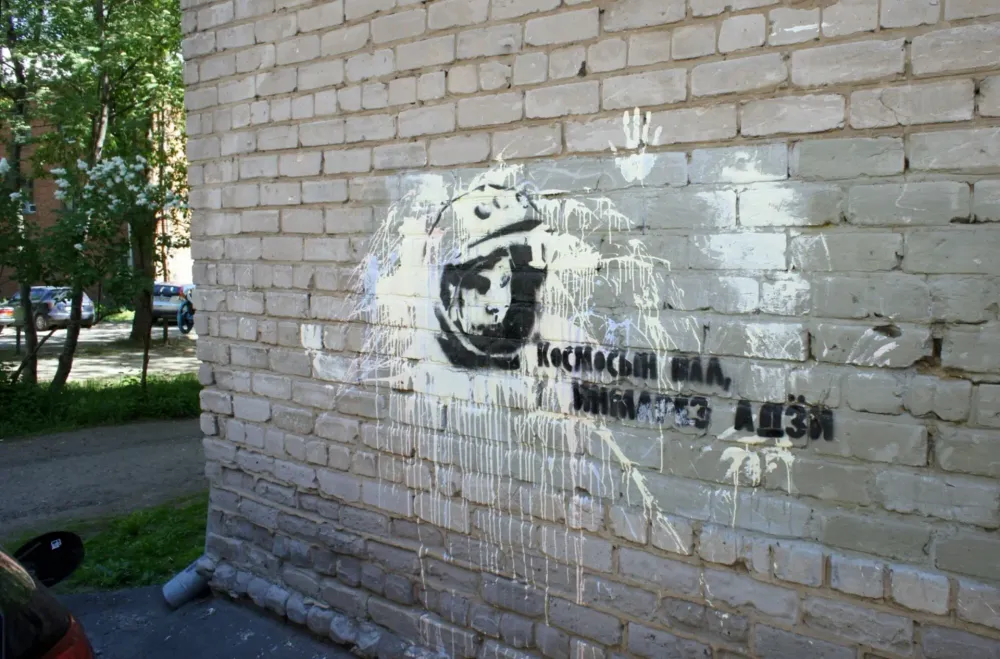
The current state of the internet pushes us to behave in certain ways. While one generation learned to present their glamorous, refined lives on the internet, the generation that followed embraced using the internet in a more careless and impulsive way. Built on certain rules and customs, the internet has moved to a paradigm with each web-version leap (Web 1.0, 2.0, 3.0).
As the speed of receiving news increased and its bandwidth widened, new areas of expertise emerged over time to fill these gaps. A kind of information subcontracting. A digital class has emerged that takes information from the people who create it and delivers it to the masses. These people, who used to work under titles like reporter and journalist, acquired new contexts with the internet: broadcaster, content creator, commentator, influencer. And practically everything on the internet turned into reaction content. (For the sake of continuity, I will refer to this group of people, which produces no new argument and engages in meta-commentary merely by reacting to what they sees, by an umbrella term content creator.)
The basic function of these people is to keep offering content on a particular niche in the digital space so they can receive sustainable and continuous engagement. Algorithms love continuity, and they force content creators to keep supplying new material without pause. In this cycle, people who do not produce original content, once they have nothing left to comment on about what is happening today, go to the past instead of researching in more depth.
Dialogue Is Shaped by Reaction Instead of Argument
The concept of a person who doesn’t produce original content has a very broad scope. The vast majority of people who exist on the internet produce content that recounts, summarizes, compiles, or talks about what is happening in politics, the economy, pop culture, arts, culture, or any other category you can think of. Meta-commentary, done by talking about the effects and echoes of ideas or actions rather than the ideas or actions themselves, also provides a ground for creators to claim they have put forward an original take.
As this second- and third-hand content becomes a mere derivative of existing topics, we inflate a kind of balloon around whatever we’re discussing. Instead of talking about ideas, we discuss the consequences of actions and look at how and why they happened. This creates fertile ground for producing counterarguments aimed at the person’s characteristics instead of talking about the values underlying the issue. Amid the fallacies, we now use the internet to let off our steam, to keep our barometer at the ideal level.
Instead of producing outputs that carry an argument toward a specific purpose, we generate noise far from quality with meta commentary. Instead of offering a new, original output, we busy ourselves with derivatives of existing outputs. Far from argument, we repeat what we have heard and watch how it echoes.

Is Output Considered Handed Over Once It’s Reshared?
It is quite possible for a person whose only title is content creator to repackage meta taken from outside, put it back into circulation on their own channels, and add no original commentary on top of it. Downloading and copying a piece of meta such as a high-production music video, someone’s speech on stage, a screenplay, or a manifesto prepared for social development, adding one’s own head to the side with a green screen, and simply saying “this is so good” counts as enough for content creation. So what discourse here transforms, enriches, or offers a counterargument to the existing material?
On another platform, a content creator, in order to prove they are an expert in the field where they provide professional services, reheats projects that were realized in past years and gathered awards and acclaim, and shares them on their own account, asking their followers, “So what do you think? Isn’t it beautiful?” Isn’t this profiting, materially or intellectually, from engagement on an old project they put no labor into?
When someone talks about a past project without naming the artist, producer, laborer, or team behind it, or the project’s title and date, could that be a form of imperialist exploitation? The person who produced the argument, who brought the work into being, has no name; their project has no name. The content creator builds a frame with discourse full of pronouns but in which the subjects are rendered invisible, such as “this person combined this many things and came up with this.” When that’s the case, the subject can suddenly be presented as if it were the content creator themselves. “Follow me for more content like this!”
The Timeless Internet Becomes Instantaneous Through the Algorithm
People who do meta-commentary, make reaction content, or talk about work they had no part in, even if they don’t call themselves that, take up a lot of engagement, attention, and space online. That has a major influence on the habits of the end user.
On one side, while these content creators talk about the past or current developments over and over again, algorithms, on the other. The internet used to be a timeless place. The archive of the past stood together, and whenever we wanted, we could rummage through it as if we had descended into a library’s archive. We could see how many pages we had to go to reach the very beginning. We knew that at some point the internet, in the context of its archive or feed, could come to an end, and when that might happen.
With endless scroll and algorithmic rather than chronological feeds, we turned the internet into a machine that practically never ends and can constantly serve new content. But it only needed to feel endless to the end user. If we disregard bot activity and content that reheats the same topics again and again through meta-commentary, the amount of content actually has a limit. Even if this number is in the thousands, even hundreds of thousands, it will still have a limit.
As algorithmic feeds took away the internet’s time and its past, they compressed digital life into the present moment alone. A paradigm was born in which, if we scroll past a piece of content we’ve seen, it becomes hard to find again; we can’t reach it even if we retrace the same steps; and if we want to form a bond with that content, “we have to engage with it in that moment.”
With the disappearance of the internet archive, and with moving our lives from websites into social media platforms and their walled-in apps, our access to the internet’s past also became harder. It’s as if we’ve lost our memory and only consume what’s placed in front of us.

If the Sought Engagement Lies in the Past, Is There Room for the New?
On the instantaneous internet dictated by algorithms, among meta-commentators and content creators racing for engagement, spending time on the internet is like building sandcastles. Every night the rising tide knocks those castles down, and when we come back the next day we have to build them again.
Some of us are hearing about original projects from the past for the first time; some of us are tired of content we’ve seen countless times being reheated and served again and again because without any new commentary added on top, past projects, ideas, or arguments are simply served for “one more round” of engagement. Since these successful engagement bait from the past can deliver the required attention whenever wanted, could they be preventing new arguments, works, or projects from being heard?
Could it be that today the allure of carving out a space for oneself by making something new has given way to the eerie comfort of repeating the past? Could feeding consumers ready-made, easily digestible content, instead of nurturing their reflex to search for something new, be passifying them? Could there be a similarity between artificial intelligence being perceived as offering an original output while constantly using past datasets, and these argument-less content creators occupying the instantaneous internet with meta-commentary?
Is repeating proven outputs instead of searching for original arguments taking the easy way out, or is it the formula for success? Does all the space taken up by praising nostalgia and proven past works narrow the playground for people searching for new arguments?
Could serving successful, proven past projects again and again be creating an artificial sense of inspiration in the consumer?
The Speeds of Information and Content Are Not Equal
Of course, information does not spread linearly and instantly. In lives before the internet, the telephone, and the newspaper, the speed at which an event happening in Paris was heard in Strasbourg, in Lyon, in Bordeaux was not the same. Time had to pass for information to move, and the whole of society could not reach the same information at the same time.
Timeless works, of course, reach each generation through a similar cycle. Even though works like Girl with a Pearl Earring, The Starry Night, and The Treachery of Images have been among us for centuries, every person encounters these works at some period of their life. Not everyone discovers these works at the same time.
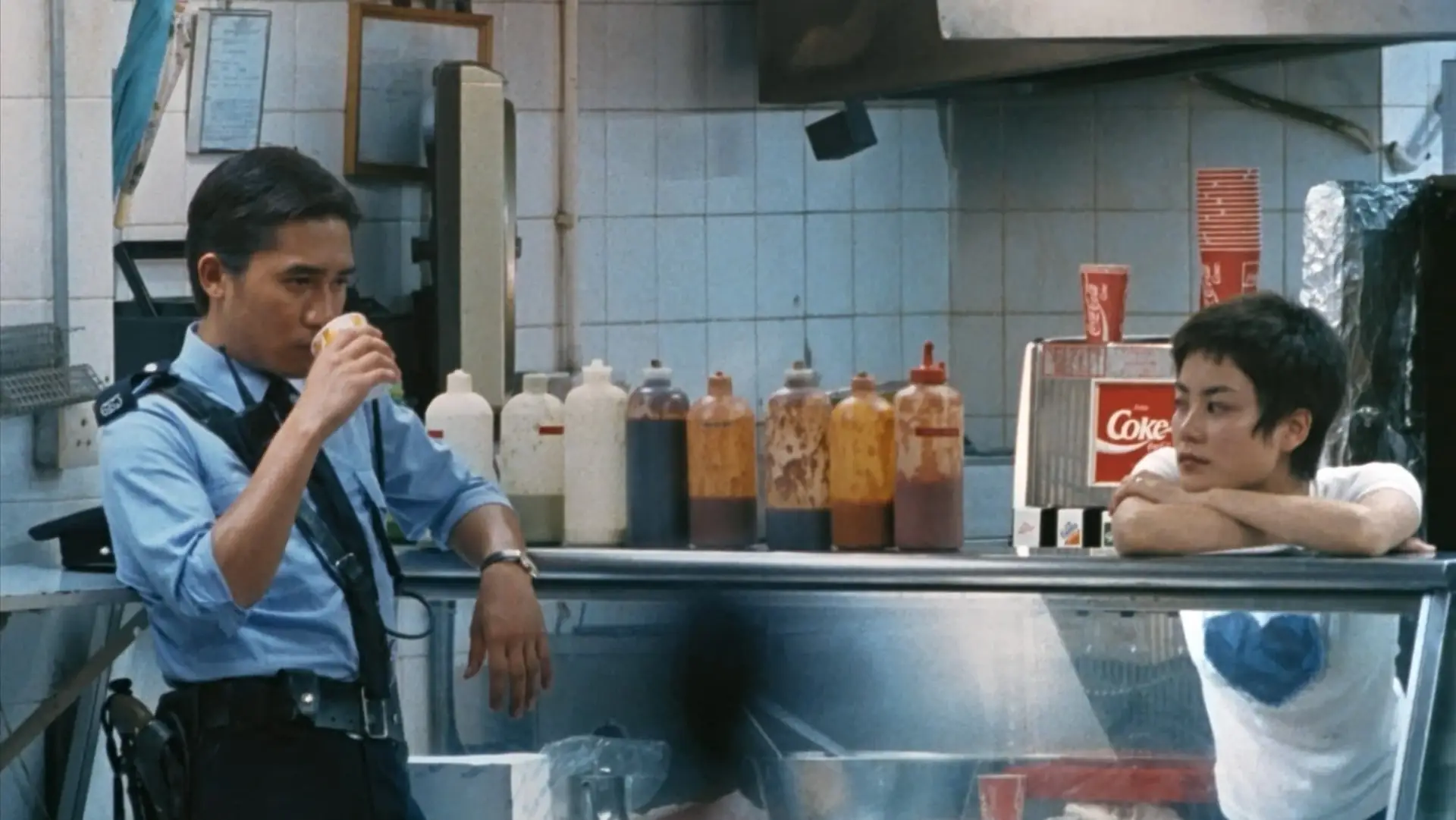
Years from now, some people will still be watching The Lord of the Rings or The Matrix trilogies for the first time. They will meet directors like Wong Kar-wai, Kim Ki-duk, and Akira Kurosawa for the first time, perhaps at a moment they hadn’t planned.
Even though the albums, films, paintings, novels, and art projects of the past are labeled classics by some and have been watched again and again, for some people there will be a moment when they engage with them for the first time. And this will continue to happen in the future.
So do the works that we could carry from today into the future as classics, the ones that promise this impact and quality, have an environment today in which they can break free from the economy of derivatives and engagement?