If the Restaurant's Menu is AI, I Want My Food to be AI Too
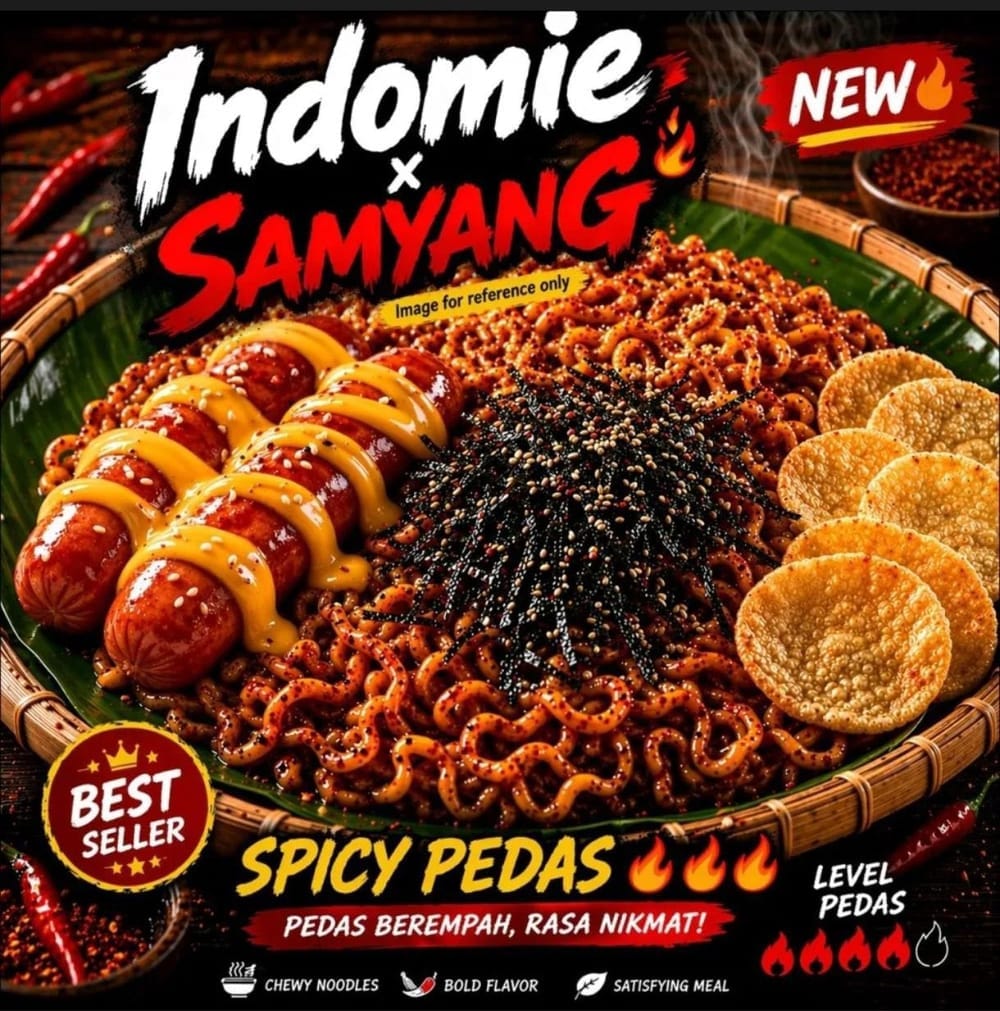
One of the biggest areas actively occupied by artificial intelligence in our lives is restaurant menus. Let alone constantly talking to generative AI, going into a psychosis, or assigning an identity to a messaging bot by humanizing it; we have entered an era where restaurant menus and all their visuals have become carbon copies of one another.
The entire service industry, especially the food and beverage sector regardless of whether they are restaurants, kiosks, or cafes, has practically become a slave to AI-generated images. All printing and copy center jobs are now printing these bland visuals, transforming the very faces of restaurants.
From doner kebab shops to luxury world cuisines, from coffee shops to taco trucks, all restaurants have equipped their menus, delivery app visuals, and exterior facades with AI imagery. But how does the customer perceive this? Where will this transformation take us? How much do AI-generated food images reflect reality?
If the images we see on the menu are AI outputs, what can we expect from the product coming out of the kitchen?
Why do restaurants choose AI visuals?
The food and beverage sector might be one of the fastest to adopt AI-generated images. Especially considering that the service they offer consists of tangible, real products rather than digital goods or services, it is obvious that this can create a massive disconnect between what customers see and what they actually get. After all, AI visuals eventually transform, distort, and almost "dream up" the input images at some point. That this technology, which was producing hallucinatory images with random snails popping up everywhere 8–10 years ago, is now accepted by an industry serving one of humanity’s most basic needs raises complex questions.
Of course, restaurants can offer various reasons to justify choosing AI visuals over hiring graphic designers, real people who put their labor into the work: the high costs of designers, restaurants racing against time, the shop barely making ends meet, and many more. Likewise, when a human wants to make an excuse, no power can stop them. A business owner who doesn't want to pay a designer shows they don't even have enough self-respect to go to Canva, download a menu template, edit it, and create an original menu.
Is the whole of society at peace with AI menus?
But how does it feel to see these AI menus as a customer? Do they attract attention? Do they look good? Are they appetizing? Does seeing AI food suddenly make you want to order?
As AI foods pop up from every corner with identical grotesque, hyper-masculine, and exaggerated visuals in every restaurant, they invite the customer beyond the uncanny valley. The uncanny valley appears as a limbo where reality and digital output become indistinguishable, intertwining and pushing us to question reality. However, AI foods go even beyond this; they drag us into a climb with no escape and no return, cornering us from all sides as an uncanny mountain.
Let's say you are attending a fair or a festival. All the food stalls have been predetermined, and you have no other choice. When you walk in, you see that almost all of the stalls have AI menus or banners. Which one would you choose? Could these visuals, jumping out like monsters, open your appetite and positively influence your choices?
Suppose you are going to eat a burrito and there are three restaurants close to each other. You look online and go to a place that looks good and has good reviews. But when you arrive at the door, you see the exterior covered from top to bottom with AI burritos. The beans look like goat droppings, and the guacamole looks like sludge. Would you go in, or would you go to another restaurant?
If you encountered the same situation at the second restaurant, would you go to the third?
I made a restaurant menu in ChatGPT then edited it 100 times to see how those hideous slop menus end up the way they are. The end result actually makes me uncomfortable pic.twitter.com/sDIUKlabdp
— Labtec (@labtec901) August 19, 2026
Could AI menus and visuals be a symptom of a larger problem?
Could the gap between businesses that consider using AI food visuals in their menus an achievement, the customers who want to eat real food, and the food itself be a simple symptom indicating a societal disconnect? While restaurants consider it a skill to cut corners but look flashy, people have started to strengthen their intuition against AI visuals.
Although recognizing AI-generated output in video and photography has become harder in some respects, and the argument that “AI visuals haven’t decreased, they’ve just become harder to spot” is gaining traction, especially online, it is still quite easy to tell when a dish’s image or a menu design is AI output.
The divergence of priorities between the buyer and the seller also causes service quality metrics to change. Customers don't eat at the same restaurant every day. On the contrary, they prefer going to different places, trying things out, and seeing new things. Even if they have places they are regulars at, the number of restaurant menus a customer sees in their daily routines, whether on a phone app or physically, is much higher than that of a business owner. The business owner constantly spends time in their own shop, at best only coming into contact with neighboring restaurants.
The seller wants to look luxurious and high-quality but refuses to pay a visual designer or receive professional service. They see cutting corners as a reasonable option. They assume that all customers will see and appreciate these AI visuals just as they do. They fail to foresee that customers might view them as an identical, distorted set of monstrosities.
Throw a rock in NYC and you’ll hit a mildly off putting AI food advertisement. pic.twitter.com/lLXVkFIFoG
— Maggie (@maggiemoda) August 28, 2026
If the menus are AI, why is the food still real?
Restaurants likely care about their food being delicious, high-quality, and appealing. Ultimately, selling a product that isn't tasty isn't a logical move. But are AI visuals sufficient to convey this sense of taste?
Why do these restaurants, claiming to focus solely on their food and barely making it through the day, cut corners on their menus like this? How will the cheapness of the visuals evoke flavor? If cheapness is so important, why don't they make their food with AI too? Let them just serve AI food to the table and be done with it. Would the customer's stomach get full?
While AI menus strip restaurants of their visual identity and character, they condemn all of us as customers to average, mediocre services. As these visual sludges replace menus that would feel much more sincere even if they were just written as plain text on a piece of paper, they are clearly expressing to their customers the level of care they have for their business.
A menu on a piece of paper written in Comic Sans, containing only product names and prices, promises a more real experience than artificial food that looks moldy but gives the illusion of being delicious through effects.
The fundamental question that emerges from a societal perspective is this: Clients and employers who find massive flaws in mistakes made by humans, being perfectionists to the point of almost terminating business relationships, are somehow tolerating artificial intelligence that can't write food names correctly, distorts visuals to a terrifying degree, and mandates constant iteration due to its sheer incompetence. How might restaurants which claim to offer flawless service from their interior design to their food, be signaling the type of business they really are by cheaping out on graphic design and choosing cheap, progressively degrading visuals with every iteration over human labor?